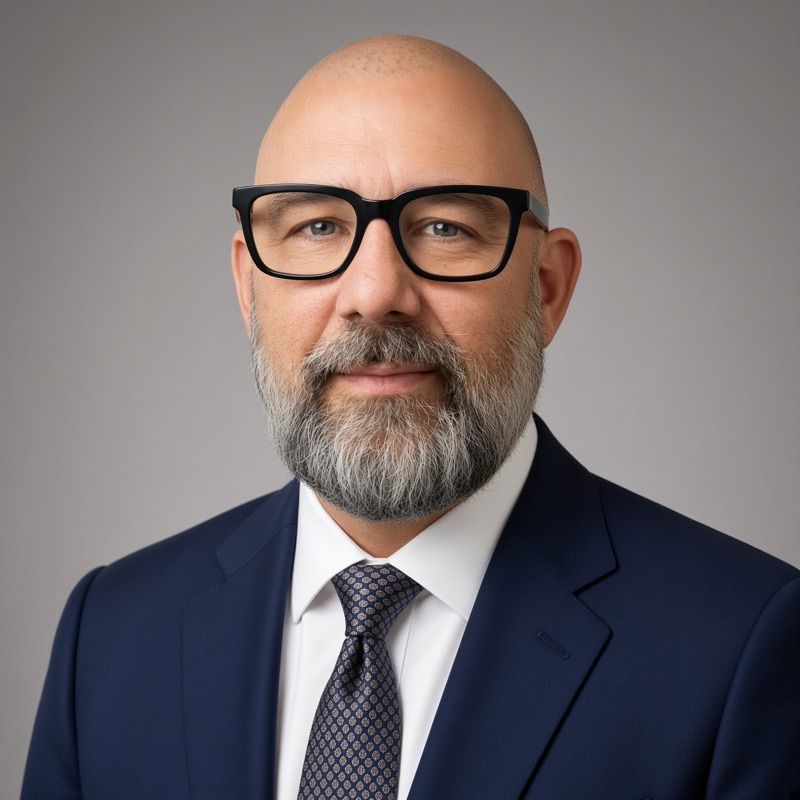
My father used to tell me I was a dreamer, always in the clouds. He wasn't wrong. I see things as they could be, not as they are, and I've spent my life chasing that, which is how I ended up on a road that looks nothing like most people's. Some days I wish I hadn't. Most days I'm glad.
I'm the fifth generation of musicians in my family, as far as I know. I picked up the violin at seven, and it never once left; one way or another, music has run through everything since. For a few years I toured Europe with our family band. We're Roma: nomads for centuries, long before anyone called it a lifestyle, and for most of that history feared and pushed to the edges: systemic discrimination, housing segregation, centuries of persecution. I know what it is to be feared by people who never knew me. Born in Serbia, no state of our own, always a little to the side of things. And that outside view became the lens for everything I've done.
I also did something almost no one around me did: I went to university. In my generation, more than 99% of my people never set foot in a college. I left in the middle of my studies, though. Not when the war came, but years later, when it got unbearable.
Before any of the tech I was an artist, and I still am. My work has only ever chased one thing: getting people who were taught to fear each other to actually look, and feel something. That's where my project My Beautiful People came from: portraits and conversations with people from both sides of a conflict, the ordinary human stuff underneath the politics.
I've spent my life standing in that gap. In 2000 I started a crisis network for my community; the next year, a school, Amala: a real place in Serbia and an online one too, that drew people from dozens of countries. I taught the Romani language, music, and culture there for fifteen years. But it was never only for us: I brought outsiders in to live alongside us, so they'd stop fearing what they didn't know and start seeing the people living right beside them.
I came to tech early and never really left. I built websites in the late '90s, then kept building to close the distance between my scattered people: a little social network for the Roma around the world, before Facebook had opened to the public, and an online shop for the Roma and Balkan music I grew up on. Later, a startup in San Francisco, a social marketplace, an old bazaar brought online before that was a phrase. It didn't make it.
So I stopped coding and started driving. People think that's the sad part. It's the best part. Being in motion is where my thinking sharpens. The road clears my head and pulls everything into focus; the nomad in me never sat still, and to this day the road still thinks for me. Close to 20,000 passengers later, I still drive most weeks. One week I'd talk with a Federal Reserve official on their way to meet the CEO of a major bank, and someone who couldn't make rent. Same week, same respect. People have broken down in my back seat. More than once it was someone who'd just been left, crying minutes after a breakup, and for that stretch of road I was the stranger holding them together. I've driven people to their mansions and people with nowhere to sleep, and people to safe houses. I didn't learn human dignity from a book. I learned it in the front seat, from strangers honest enough to trust me. And they listened back.
A school, my art, my music, a marketplace, a car, now AI. It's been the same instinct the whole way. There's a new divide now: the people racing toward AI, and the people afraid of it. I've stood between sides my whole life, and I understand both. I believe they'll build this thing together in the end, maybe even in the back of my car. It's seen unlikelier pairs. So here's what I tell them: built right, AI isn't here to replace you. It takes the work that's crushing you off your back, so you get your life back. Not AI instead of you. AI with you and for you.
If that resonates, the first conversation is free and no-pressure.
Let's talk →